Welcome to Shenzhen Sunshine Good Electronics Co.,Ltd.!


Provide raw and auxiliary materials, characteristic functional circuits, and finished product performance evaluation and analysis support for your component products;
Provide specific product certification service support for your component products and terminal devices;
There are also a lot of technical product application material downloads that meet your needs.
1、 Pain point analysis
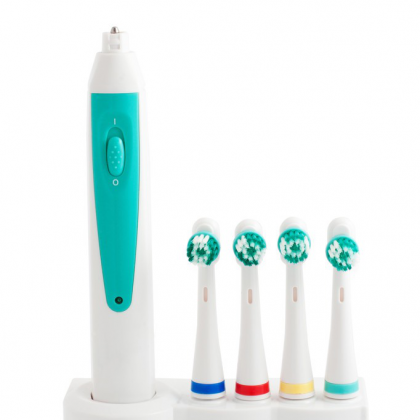
Currently, there are many types of brush heads for electric toothbrushes, with uneven quality. Counterfeits and imitations often occur. Affecting the user experience,
Bringing losses to manufacturers of electric toothbrushes and consumables.
To address the above issues, our company has launched an anti-counterfeiting application solution that can be intelligently managed with an electric toothbrush device terminal
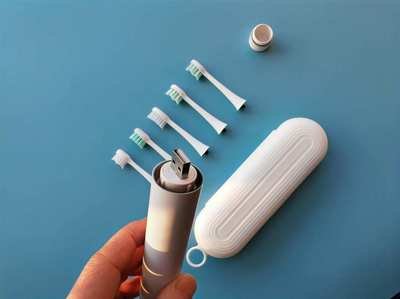
The electric toothbrush can automatically identify genuine brush heads, automatically select corresponding driving modes, and intelligently record the service life of the brush head, improving
Customer experience, improve product sales, and protect the brand rights of manufacturers of electric toothbrushes and brush heads.
2、 Program Features

. Not just anti-counterfeiting
It also has functions such as anti-counterfeiting identification, information advertising website navigation, and Bluetooth fast pairing to improve the product image and grade;
(1) . NFC protocol library (implantable electric toothbrush master MCU)
Support for Bluetooth control platform:
Furikun: 801X series, 800X series;
REALTEK: 8762X series;
Huiding: 6616 series;
Ongway: 6621X series;
NORDIC: 528X series
Supports pure MCU platforms: GD, Huada, Xintang, Hetai, Hangshun, etc
(2) . NFC card reader chip:
Skyray, Fudan WeChat, Tongfang WeChat, NXP, ST, etc
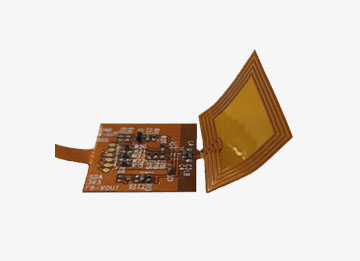
(3) . NFC card reader antenna customization (RF modulation)
Flexible circuit board process, ultra-thin rigid circuit board process, enameled wire winding process, enameled wire winding substrate process, copper etching process, aluminum/copper metal printing process
(4) NFC label module customization
2. Industrial grade design, compact size, complete structure, waterproof and stain proof;
3. Effectively identify the brush head type and automatically select the corresponding drive mode, which is convenient to use;
4. Intelligently record the service life of the brush head and remind users to replace the brush head in a timely manner;
5. 100% effective identification;
For more plans, please contact Mr. Xie at 13699820470
http://www.sz-sg.com.cn/security/399.html
Core technology types of circuit board PCB products:
1. Microelectronics PCB Solutions
2. Hardware Electronics PCB Solutions
3. Device Component Technology PCB Solution
http://www.sz-sg.com.cn/payment/204.html
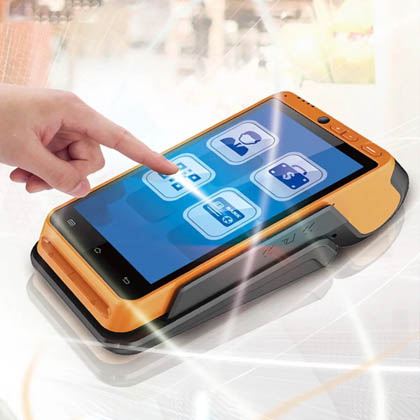
Campus One-Card Application - Portable Mobile Terminal Equipment Cuts into Mobile Card Terminal Technology Scheme
1、 Campus one-card application system platform
2、 Mobile card end products
3、 Entry point for portable mobile terminal equipment
4、 Technical Scheme for Portable Mobile Terminal Equipment Cutting into Mobile Card Terminal
(1) M1 Logical Encryption Card Technical Scheme
(2) Single interface CPU smart card technology solution
(3) Dual interface CPU smart card technology solution
(4) Dual-frequency RFID card technical solution
5、 Exploration and precipitation of campus one-card closed-loop network technology, products, and application standards
Exploration and precipitation of campus one-card closed-loop network technology, products, and application standards. JPG
(1) RF technology and application issues:
1. Multi mode application case software and hardware configuration and management;
2. The underlying RF electrical protocol (compatibility, card reading effect);
3. RF electrical performance (compatibility, card reading effect, anti-interference stability).
(2) Security issues:
1. Card side security (easy to crack), and card reader side security issues are relatively rare (SAM is always on the server);
Improvements: Adjust to a CPU smart card for underlying protocol security encryption, and adjust to a random number security authentication, commonly referred to as underlying chip security SE (L1 layer).
2. The multimodal application data interaction between the card end and the card reader/server is typically referred to as business flow interaction security (L2 layer), which involves case standardization and process security processing;
3. Provide SE basic services to SE publishers and application service providers to achieve SE lifecycle management, security domain creation, business application download, and personalization, which is called TSM trusted service management;
4. TEE is an independent execution environment running in parallel with Rich OS, providing security services for Rich environments. Namely, the terminal operating system security zone mode;
5. Network identification and authentication security, i.e. L3 layer mode.
http://www.sz-sg.com.cn/ppr/207.html
Identity recognition application
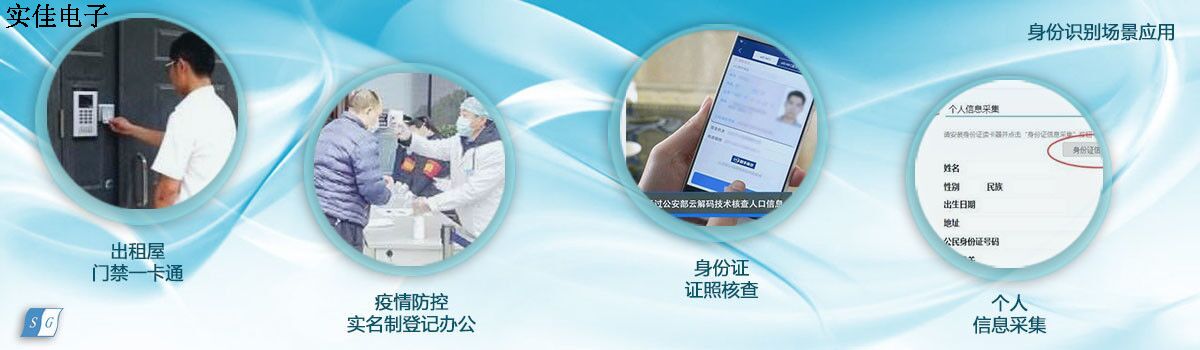
ID card reading (comparative verification of personal cards): police patrol, customs clearance inspection, grid management, tenant management, hotel guest management;
Collection of identification information: registration and collection of specific information for personnel entering and leaving the park/building/community property/government agency;
Real name registration: logistics services, epidemic prevention and screening, population census, floating population management, electronic ticketing management, other administrative management, etc;
Identity card: access control, attendance, door lock, library borrowing and returning management, replacement of hospital medical card, replacement of driver's license, etc;
Identity authentication: Authorization and authentication of smart car owners, financial and tax management (such as KEY Shield application), government, enterprise, and government affairs.
Personal ID Card Cloud Reading
A card reader that can connect to the authorized decoding channel of the public security system can identify the province, city, date of birth, serial number, men and women, name, gender, nationality, ID card number, household address, person photos and other data information of the ID card through proximity non-contact induction, and display them in the form of complete license/partial data information shielding, so that the staff can verify the use of the ID card or other identification and authentication needs. That is, personal identity certificate cloud reading, also known as "personal identity cloud decoding".
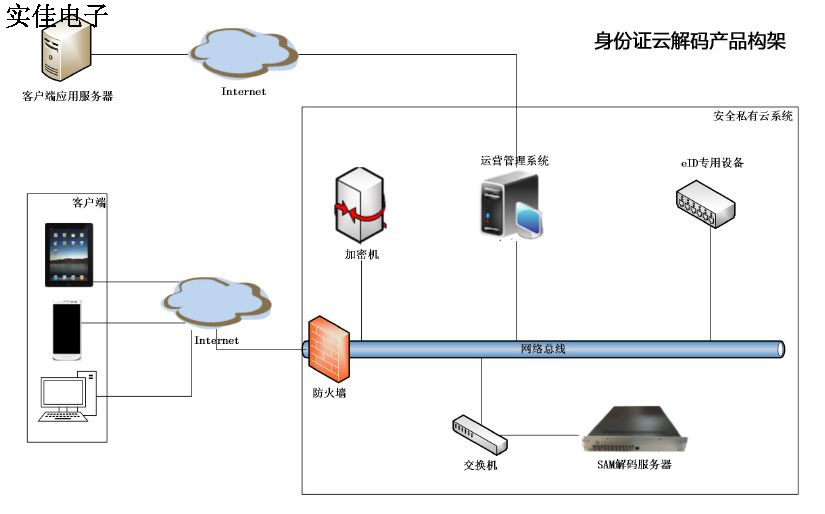
Shijia Electronic Personal Identity Card Cloud Reading Scheme Architecture
NFC/RFID identification acquisition terminal module: a hardware module that realizes the function of proximity non-contact induction identification and identification
SDK: Driver hardware module, integrated license cloud reading interface, simplified application secondary development
APP: Client application development and integrated application management platform access
Application business background server: cloud read account management, device binding management, and other business logic
Cloud reading system: processes decoding authorization requests and returns decoding information
Implementation Method for Cloud Reading of Personal Identity Card of Terminal Equipment
A proximity RFID module has been embedded in the terminal device, which directly calls the SDK interface to develop a customer application app. After account application, device binding, and decoding authorization activation, cloud reading of ID and eID electronic licenses can be achieved.
The terminal device does not have a short range RFID module embedded in it. By purchasing our module to add NFC functionality to the device, you can achieve ID card and eID electronic license reading, and support the following methods of connection: wired connection plug-in (card reader: USB, OTG, serial port, 232) and wireless connection plug-in (smart watch: Bluetooth BLE).
Common terminal devices: plug-in interface card readers, watches/bracelets inserted into decoding card reading modules, PDA/tablet computer terminals inserted into decoding card reading modules, etc.
Shijia Electronic Short Range Radio Frequency Identification Module (RFID Identification Acquisition Terminal Module&NFC Full Function Module)
SGA908NFC-A11: ID Card Cloud Reading, eID Electronic License Cloud Reading, General NFC Function Extension
SGA910NFC-B11: ID Card Cloud Reading, eID Electronic License Cloud Reading, eID Electronic License Local Reading
SGA906NFC-G11: ID Card Cloud Reading, eID Electronic License Cloud Reading, Android Native NFC Function Extension
Sunshine Good Electronic Internet of Things Application one-stop service
Provide identity recognition application operation architecture mode and platform server planning;
Provide evaluation and data joint debugging of various terminal equipment cloud reading IoT application solutions;
Provide various terminal equipment procurement services;
Provide cloud reading, information recognition, specific information collection, and real name registration bundled multimodal application APP software development;
Provide cloud reading Internet of Things application environment, network interconnection and interworking problem point evaluation, and compatibility standard debugging services.
http://www.sz-sg.com.cn/security/209.html
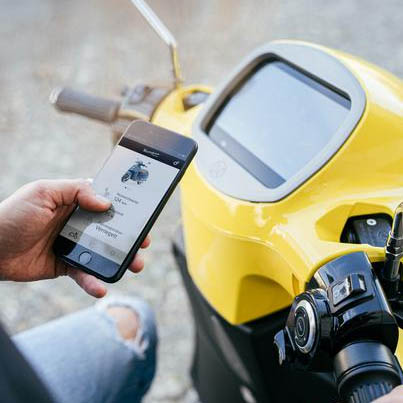
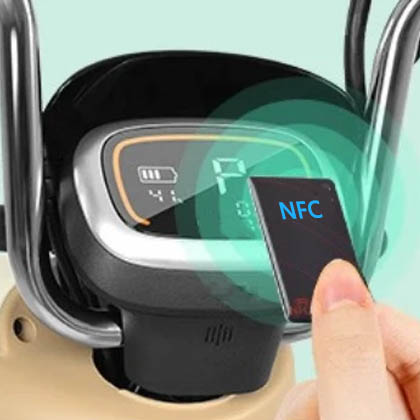
NFC lock identification scheme - two-wheel electric vehicle circuit lock (card&mobile phone smart key)
ISO14443 printed 1EC14443 is a non-contact IC card standard. Focus on the physical characteristics of non-contact sensing, spectral power, signal interfaces, initialization and anti-collision algorithms, communication protocols, etc.
The PAYPASS/PAYWAVE standard adds a variety of contactless credit cards and mobile payment cards based on EMV, and requires certification through PAYPASS/PAYWAVE Level 1 and Level 2.
Establish a unified standard for card and terminal interfaces in the financial IC card payment system to ensure that all cards and terminals under the system can interoperate and effectively improve the security of bank card payments. Require EMV/QPBOC Level 1 and Level 2 certification.
NFC Forum compatible support for ISO/IEC 14443 Standards such as ISO/IEC18092, JISX6319-4, and ISO/IEC15693 specify modulation mechanisms, encoding, transmission rates, frame structures, RF interfaces, initialization processes, conflict monitoring, and transmission protocols.
(1) RF technology and application issues:
1. Multi mode application case software and hardware configuration and management;
2. The underlying RF electrical protocol (compatibility, card reading effect);
3. RF electrical performance (compatibility, card reading effect, anti-interference stability).
(2) Security issues:
1. Card side security (easy to crack), and card reader side security issues are relatively rare (SAM is always on the server);
Improvements: Adjust to a CPU smart card for underlying protocol security encryption, and adjust to a random number security authentication, commonly referred to as underlying chip security SE (L1 layer).
2. The multimodal application data interaction between the card end and the card reader/server is typically referred to as business flow interaction security (L2 layer), which involves case standardization and process security processing;
3. Provide SE basic services to SE publishers and application service providers to achieve SE lifecycle management, security domain creation, business application download, and personalization, which is called TSM trusted service management;
4. TEE is an independent execution environment running in parallel with Rich OS, providing security services for Rich environments. Namely, the terminal operating system security zone mode;
5. Network identification and authentication security, i.e. L3 layer mode.
http://www.sz-sg.com.cn/payment/208.html